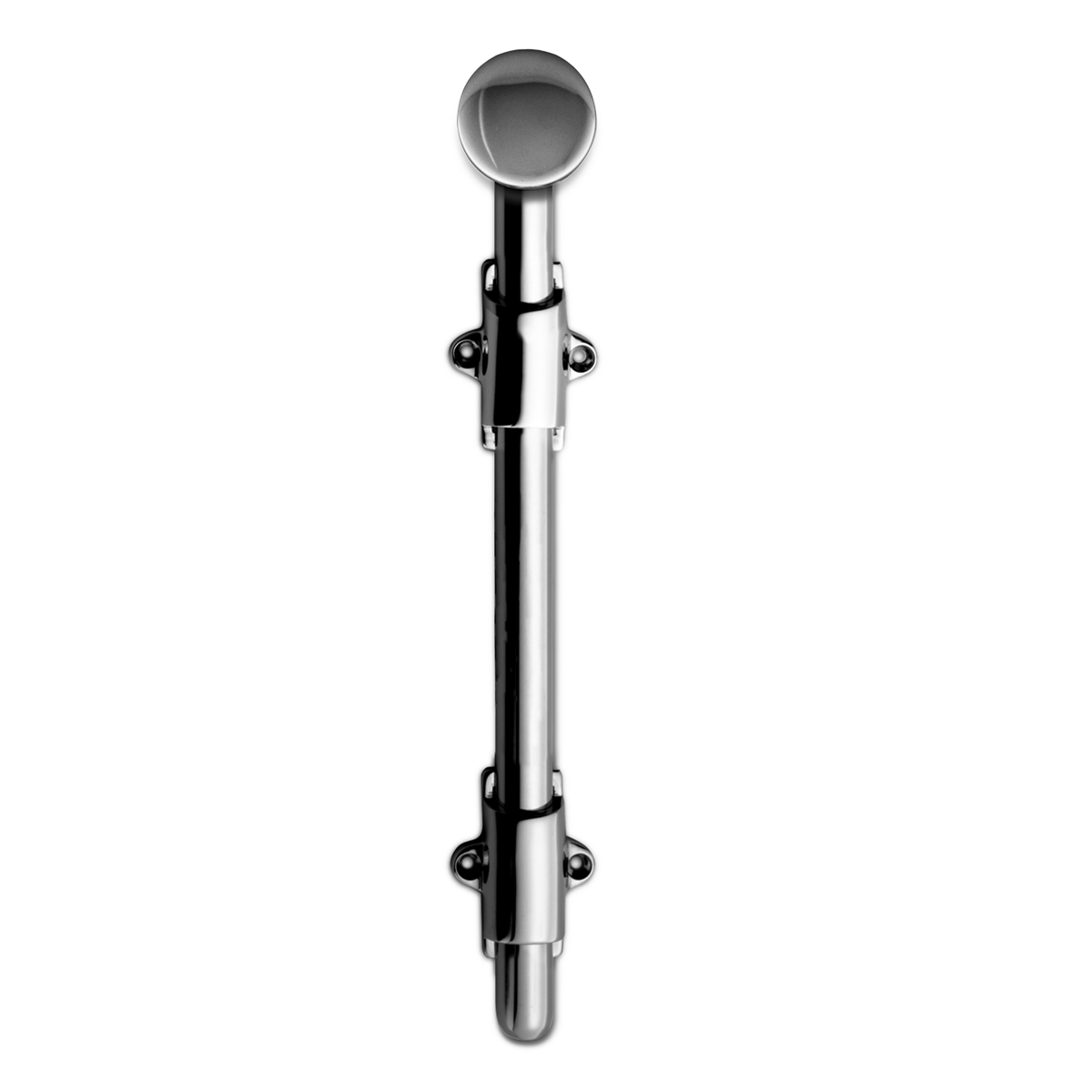
The Nº 7958 415 surface bolt is typically used on the passive leaf of a double door at top and bottom. The bolt provides a decorative element, suitable for a variety of periods and styles. It can be used in conjunction with the Nº 7961 cremone bolt or a mortise lock on the active leaf. All NANZ plated and patinated finishes are available.
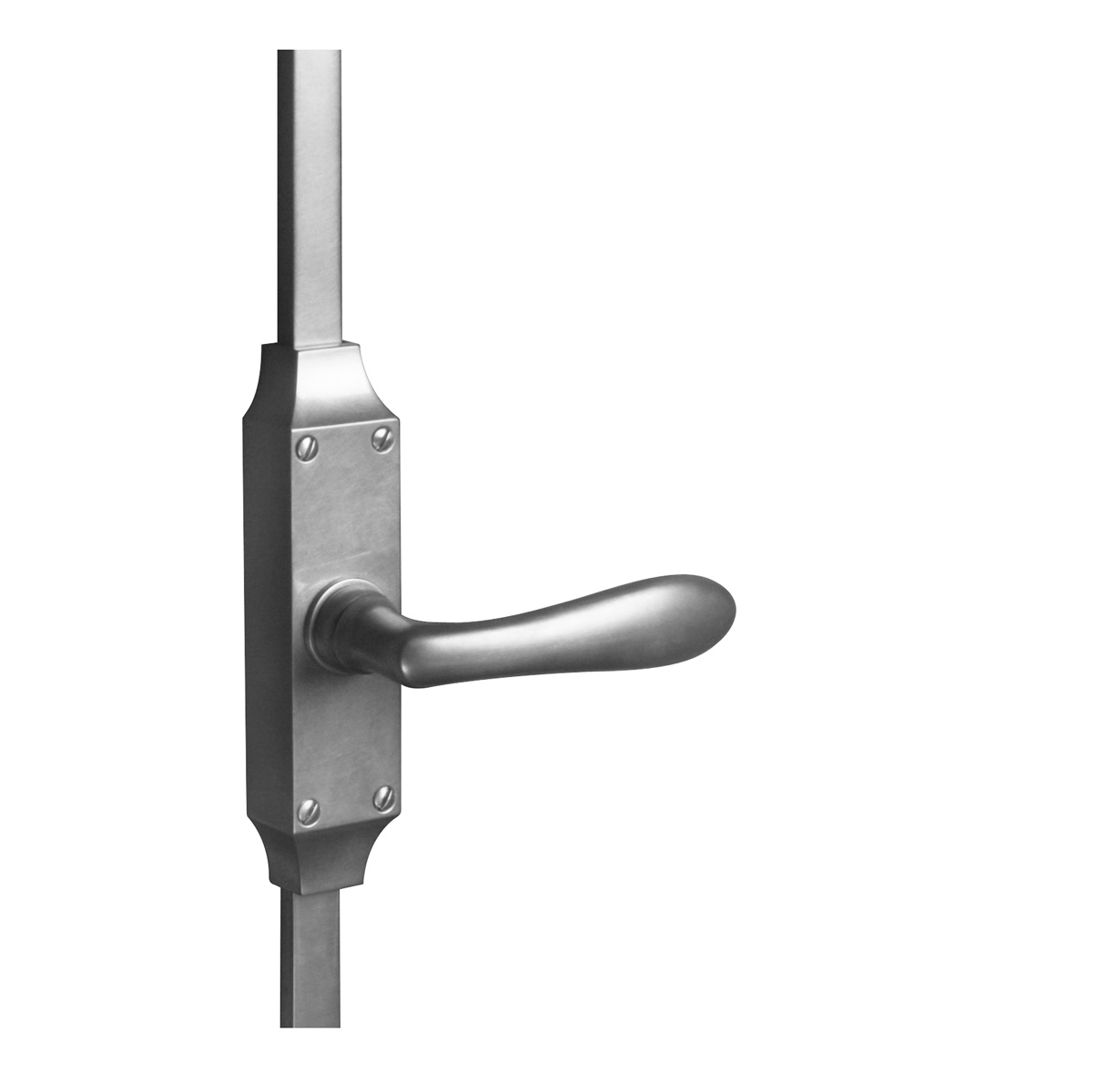
The design of the Nº 7961 cremone bolt, traditionally used to secure french doors, dates to the early part of the 20th century. While forward-looking in its functional, rectilinear design, the cremone’s body incorporates a traditional motif in the form of the coves terminating the top and bottom. Most NANZ levers and oval knobs can be used. All NANZ plated and patinated finishes are available.
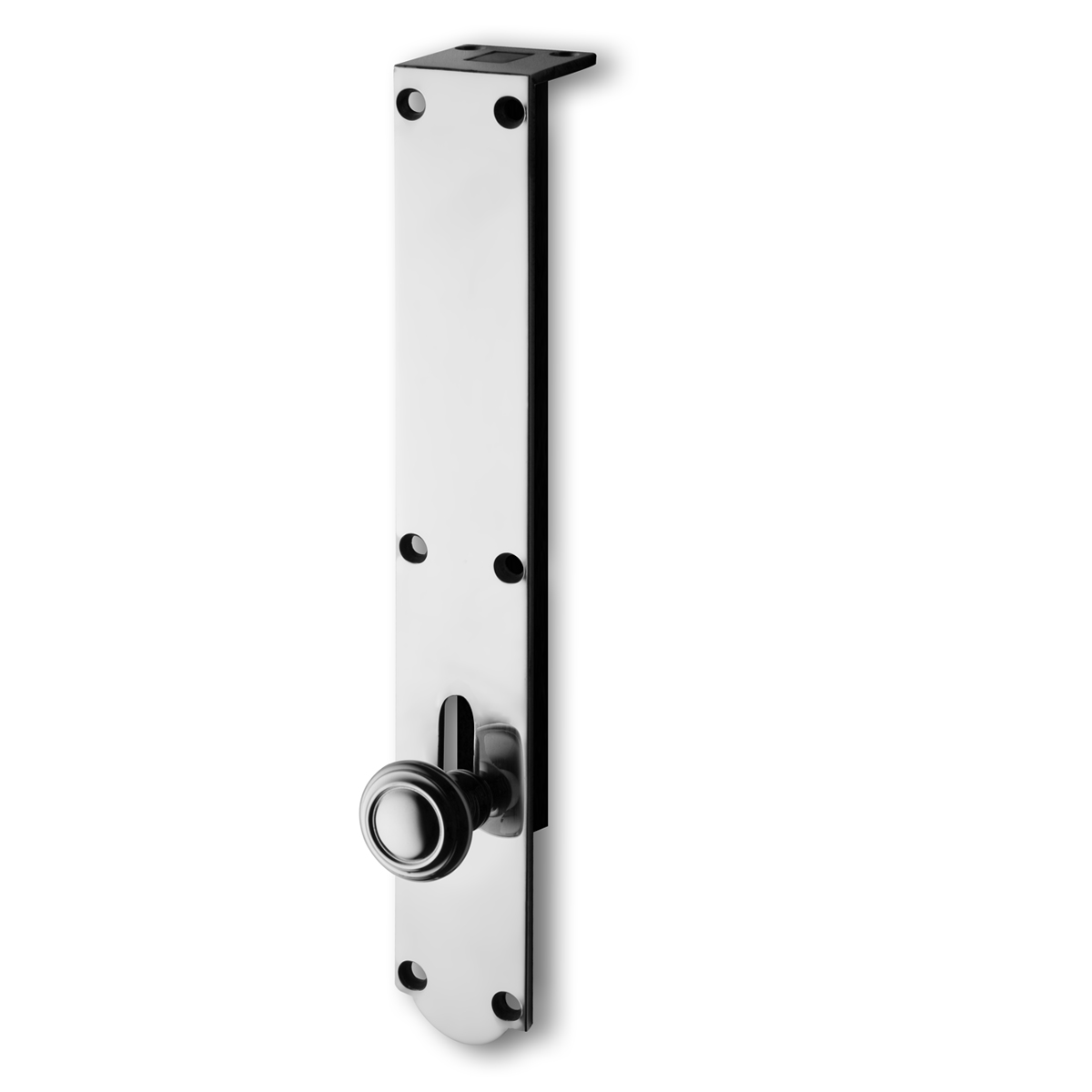
The Nº 7980 full mortise flush bolt, usually used in pairs, is designed to secure the inactive side of a double door. The faceplate and bolt are mortised into the face of the door, and the angled leg into top or bottom of the door. All NANZ plated and patinated finishes are available.
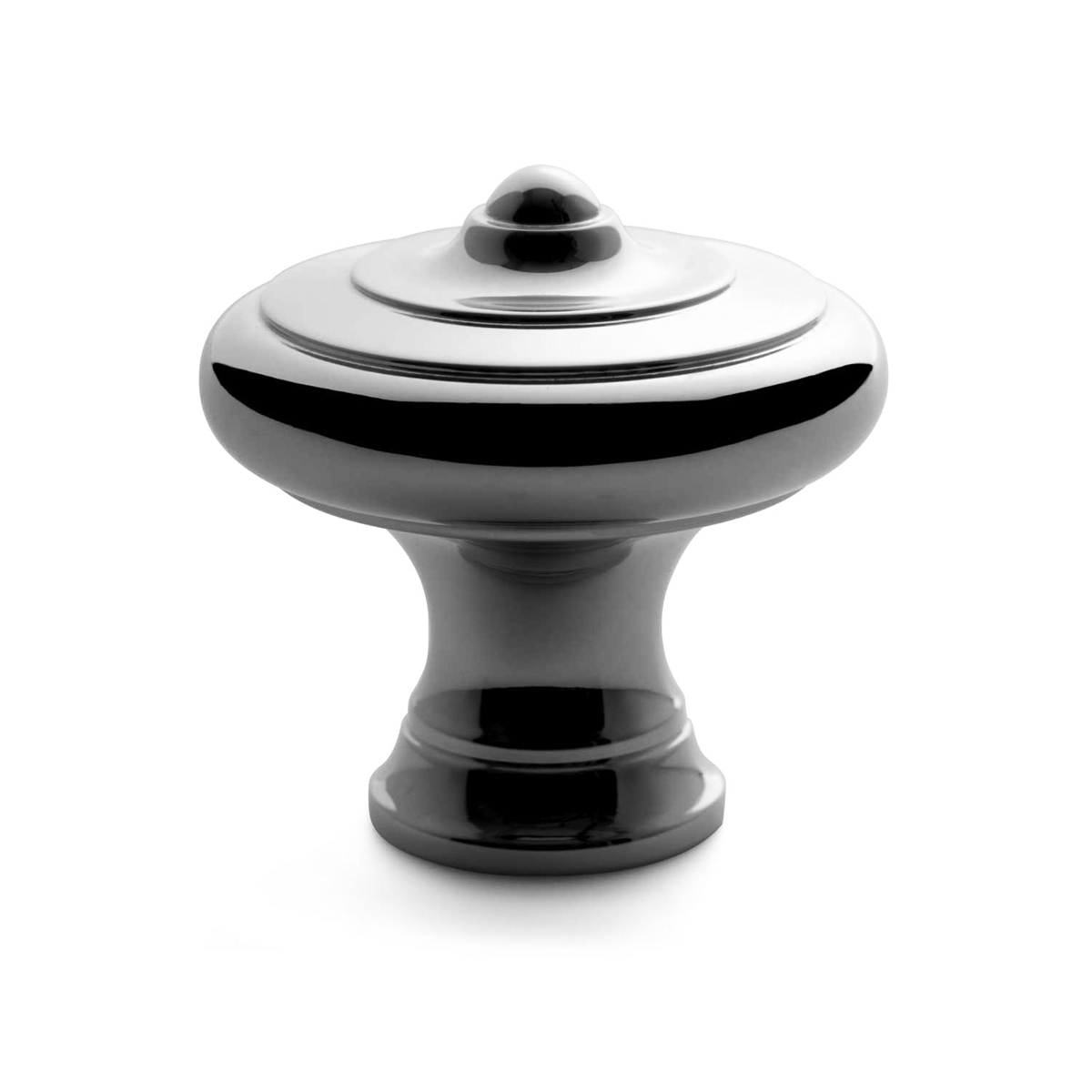
The face of the No 8003 Georgian cabinet knob is broken by a series of steps, diminishing to a cavetto with a boss at the center. The repeated outward curves of the knob are balanced by the cove profile of the shank. The well proportioned knob is appropriate for a variety of styles and periods and is shown here with and without an optional rosette. It is often specified with the companion No 1003 knob, which is manufactured in a variety of sizes for full-sized doors. All NANZ plated and patinated finishes are available.
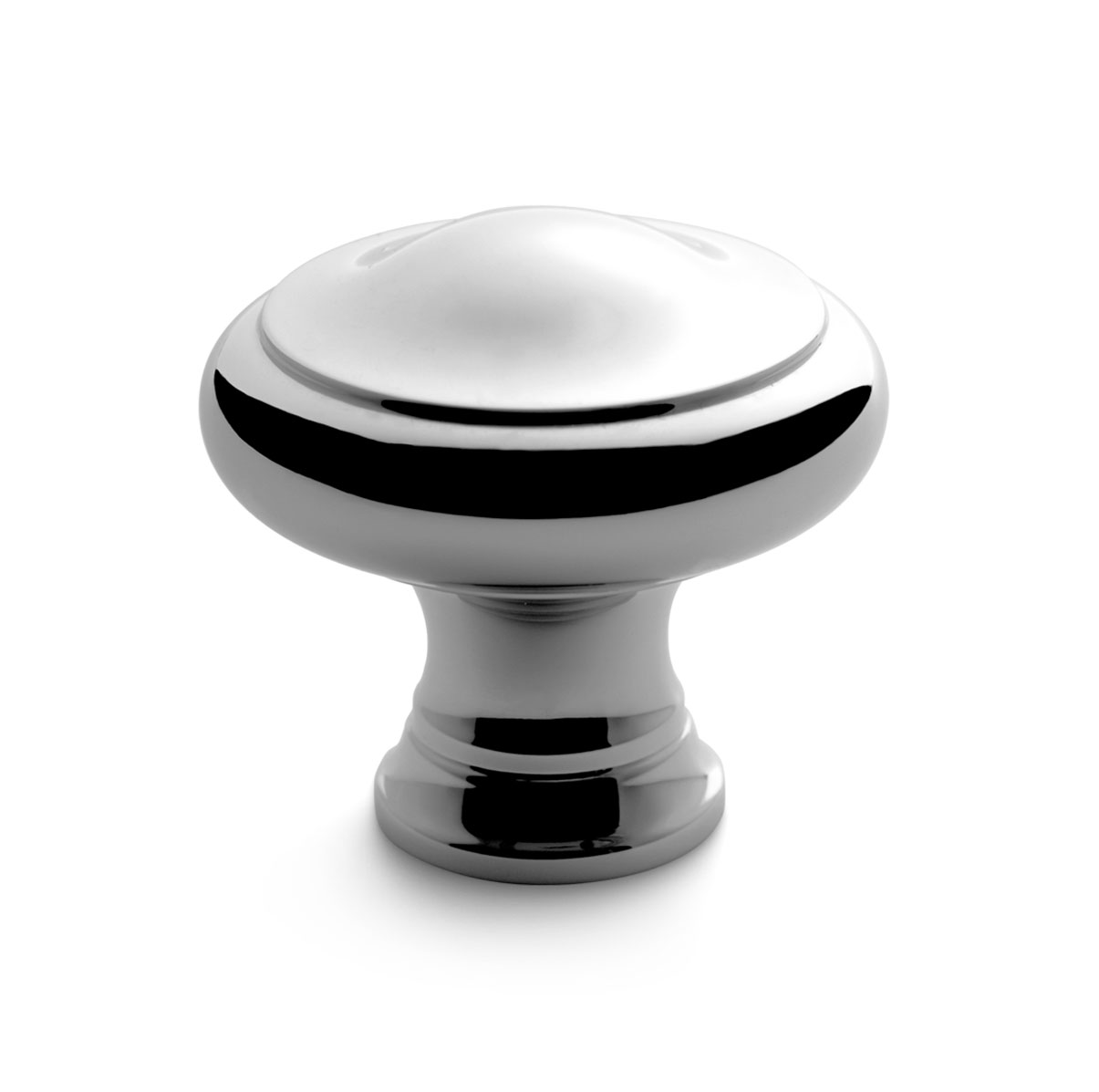
The Nº 8004 Georgian cabinet knob was often used in Neoclassical Park Avenue apartment buildings of the 1920s, though it is appropriate for other styles and periods as well. The ogee-profiled face and torus edge of the knob surmount the shallow cove of the shank. The knob is shown here with an optional rosette. It is often specified with the companion Nº 1004 knob, which is manufactured in a variety of sizes for full-sized doors. All NANZ plated and patinated finishes are available.
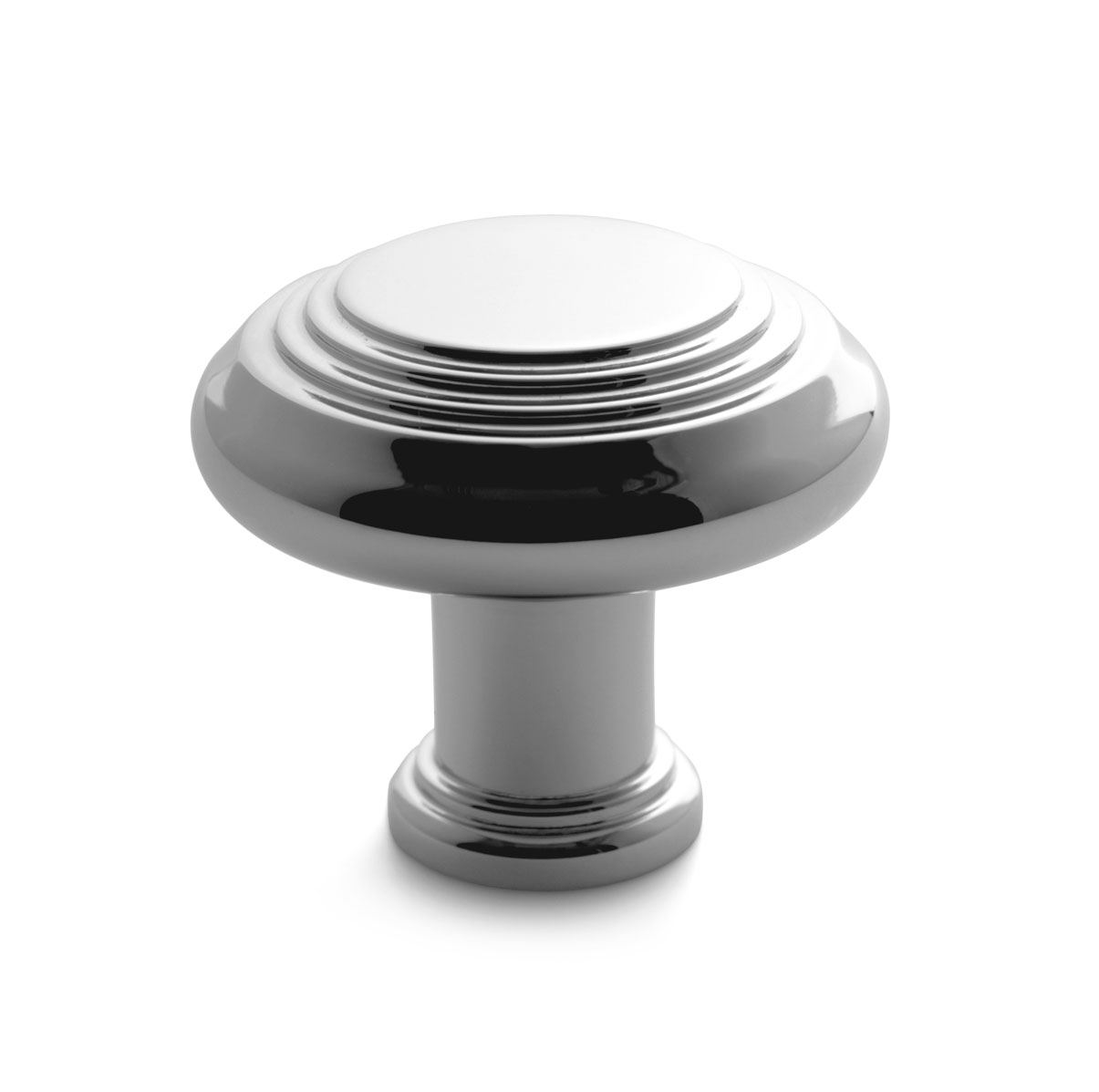
The No 8006 cabinet knob was inspired by an American Art Deco design of the 1930s. The series of steps on the face of the knob are repeated in the base of the shank and in the optional rosette, which is available at an additional cost. It is often specified with the companion No 1006 Deco knob, which is manufactured in a variety of sizes for full-sized doors. All NANZ plated and patinated finishes are available.
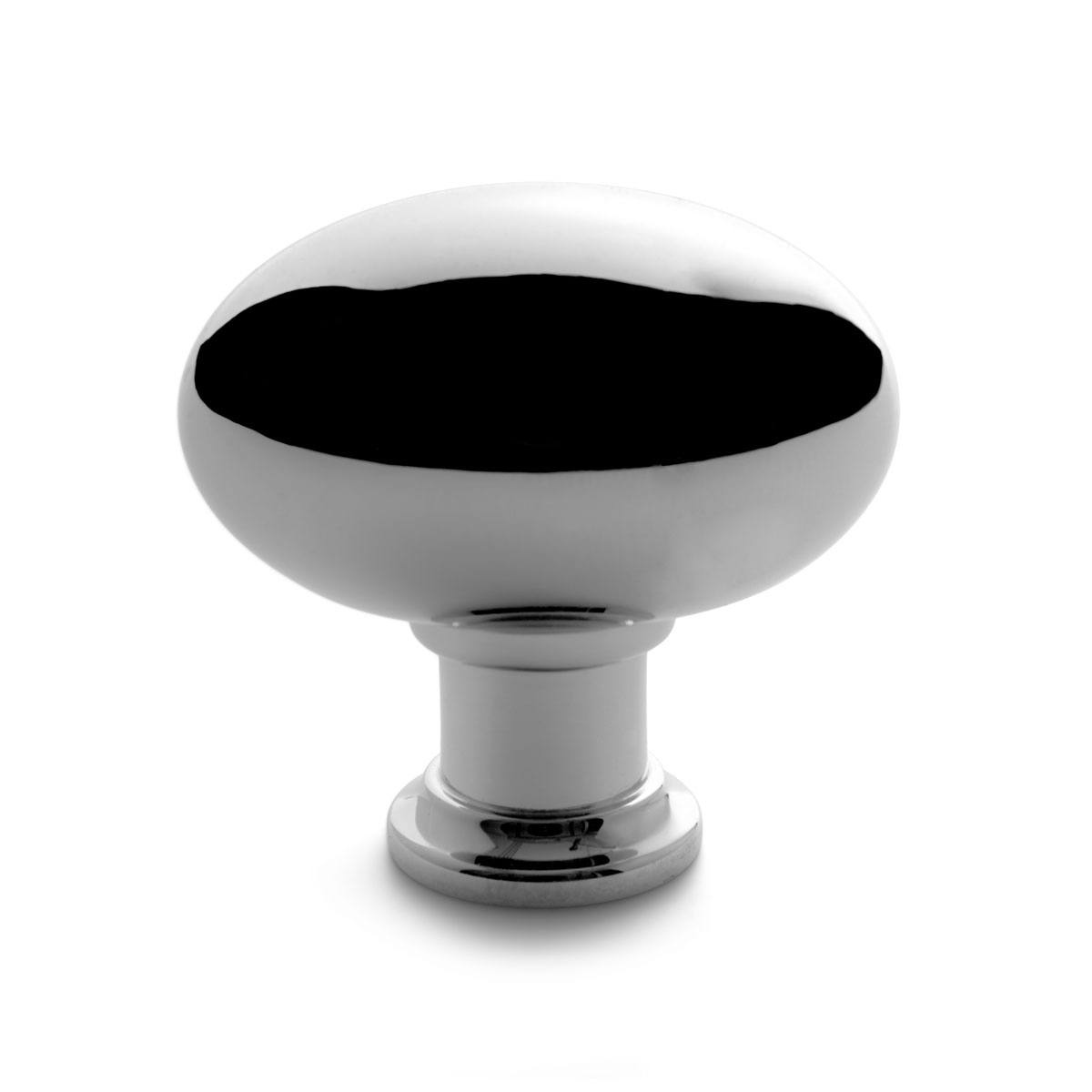
The No 8007 oval cabinet knob reflects the International Style of Modernism during the 1920s and 1930s. It updates the classical profile and molding details of the NANZ traditional oval knob. The knob is available in two sizes. All NANZ plated and patinated finishes are available.
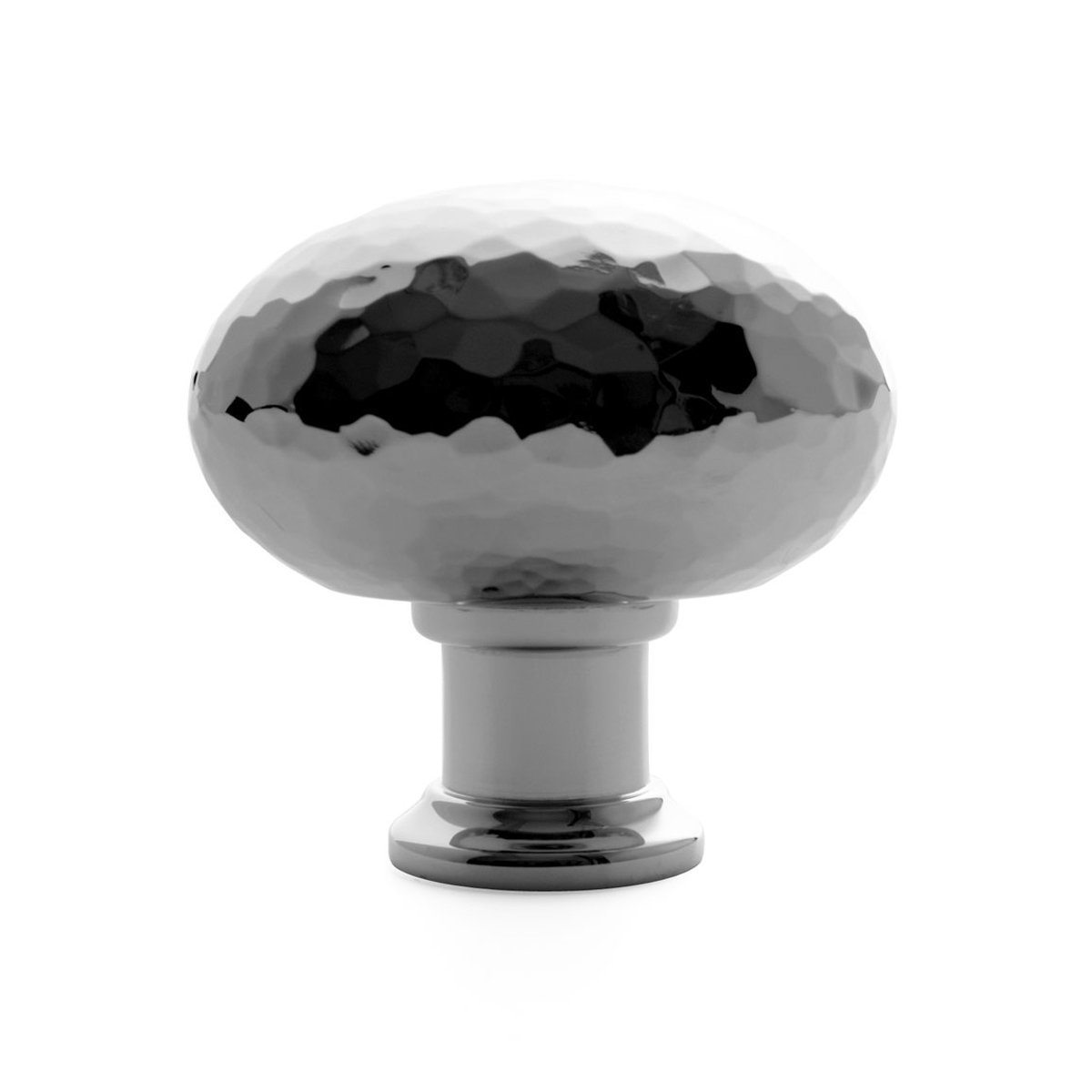
The No 8007H oval cabinet knob, a hand-hammered version of the original, reflects the International Style of Modernism during the 1920s and 1930s. The custom hand peening, an art popularized during the Arts and Crafts movement, paired with the single step detail, straight shank and simple flaring rose updates the classical and molding details of the NANZ traditional oval knob. The knob is available in two sizes and in all NANZ plated and patinated finishes.
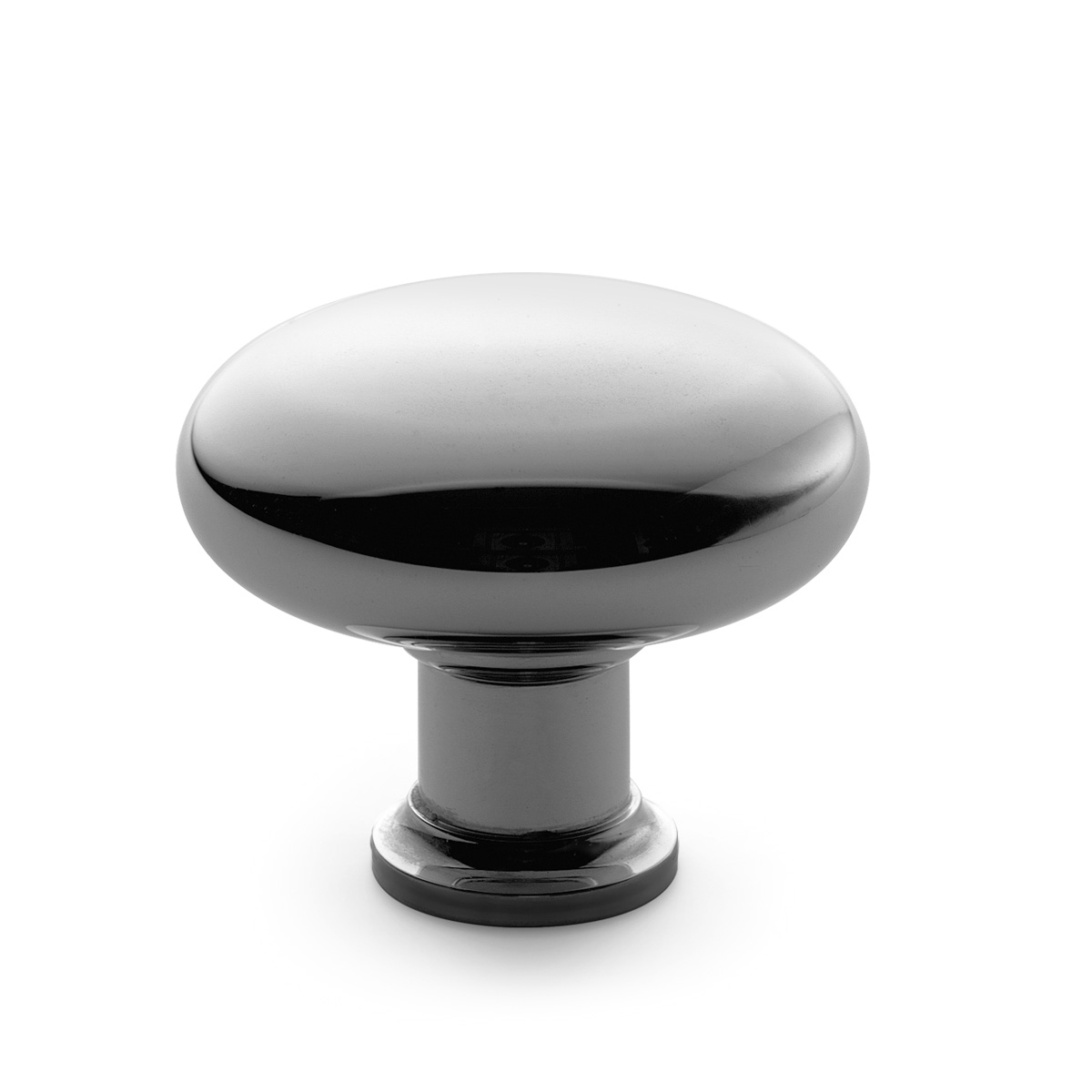
The N° 8008 cabinet knob reflects the International Style of Modernism and finds its aesthetic value in the par, ing down of forms and the use of industrial materials of the 1920s. Typical of the design style, a single step joins the knob to the straight shank and a cove detail transitions to the simple flaring rose. The knob is available in two sizes and in all NANZ plated and patinated finishes.
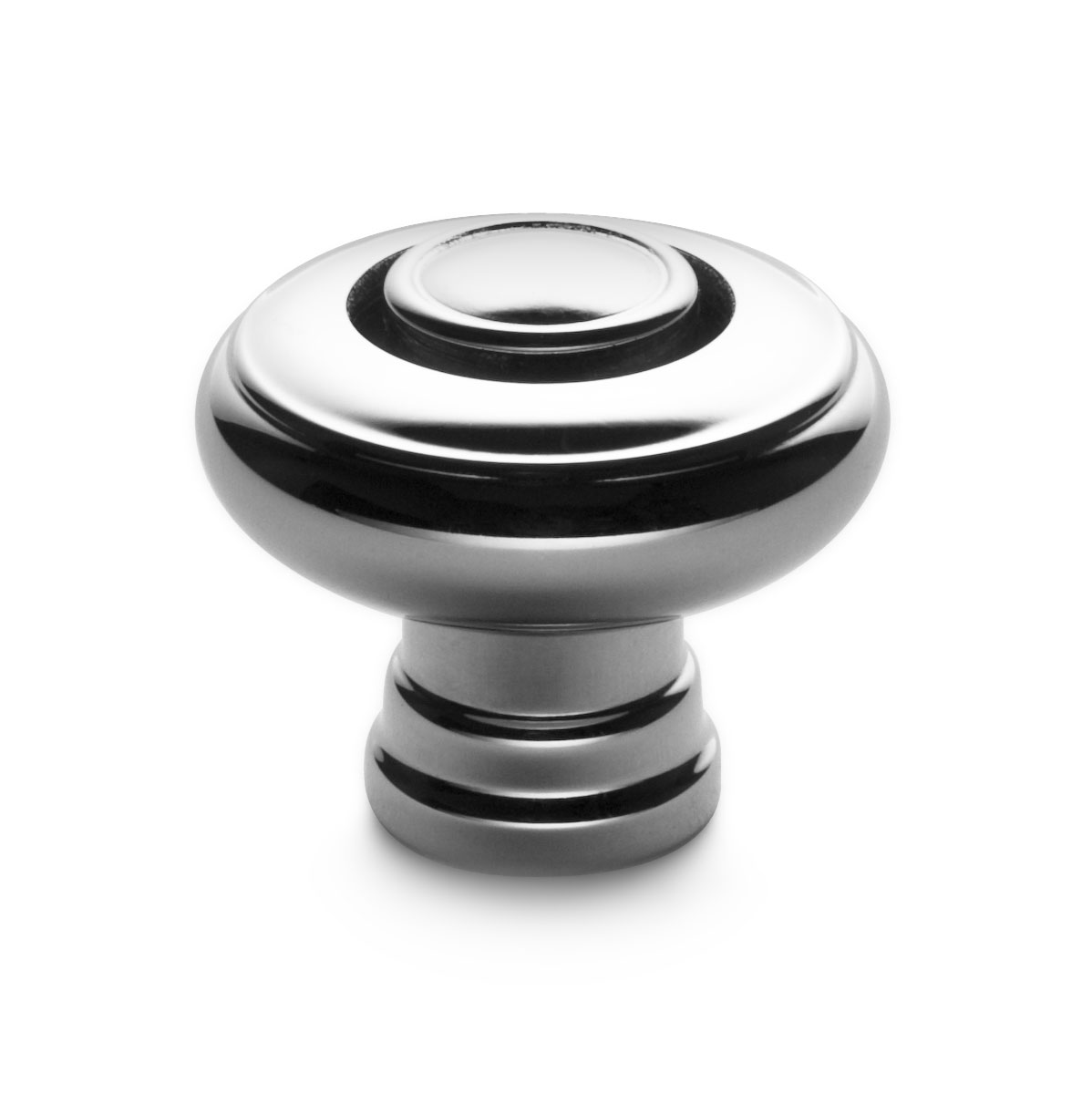
The No 8010 cabinet knob is a cross between the classic 18th-century Georgian knob and the streamline detailing of mid-century modernism. The simplified face featuring a roundel floating in a deep, open reveal has a jet-age feel. It is often specified with the No 1010 doorknob. It is available in all NANZ plated and patinated finishes.
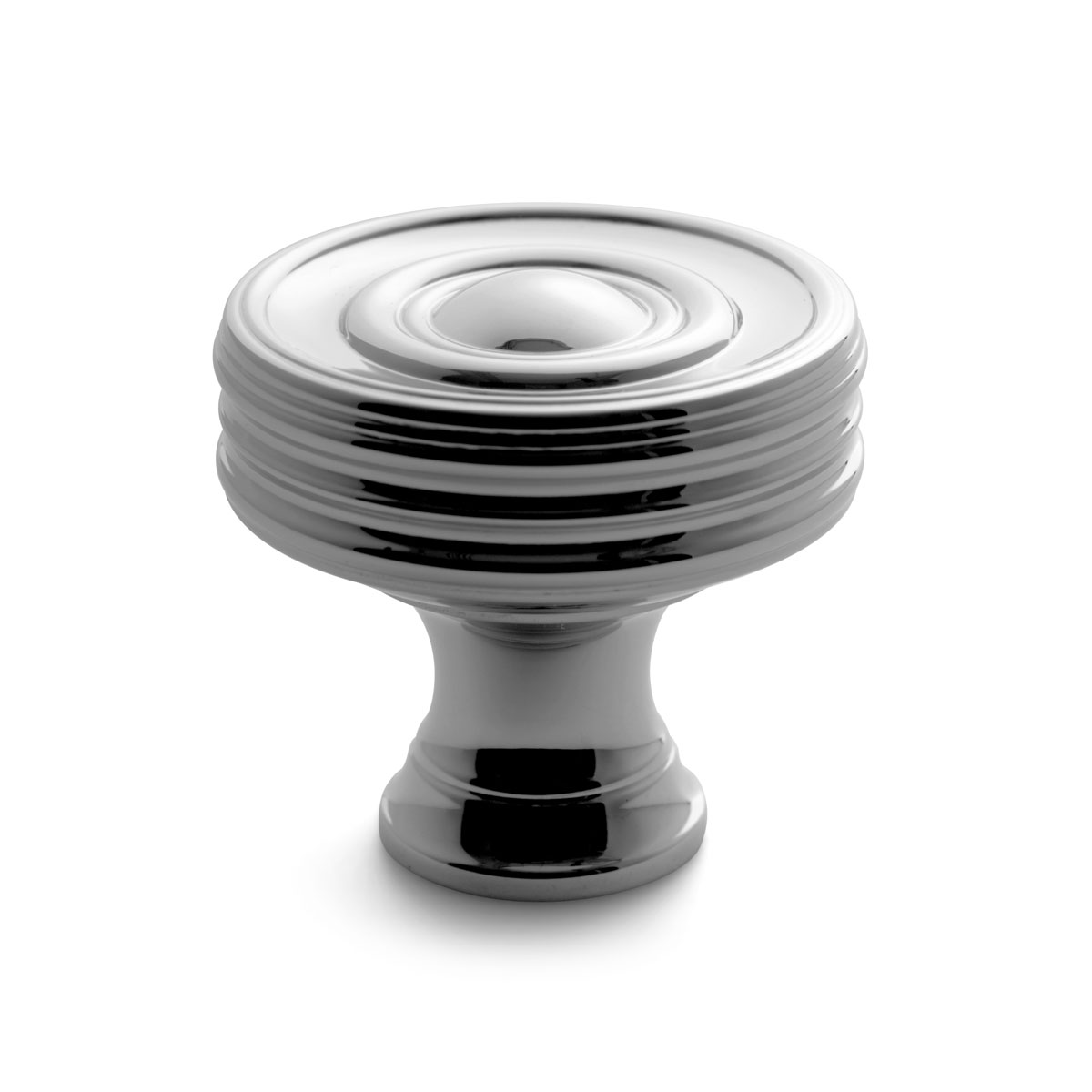
The No 8011 French Bull’s Eye cabinet knob, designed by Steven Sclaroff, is based upon turn of the century drum-shaped knobs. It features deep, highly shaped ogee curves on the sides, much larger than the old French hardware that inspires it. It has a modern scale but without losing the level of detail and shape of the original. Recommended finishes include burnished brass, dark oxidized bronze, chrome, nickel or silver plate and antique gold. It can be used in combination with the companion No 2111 French Bull’s Eye lever or the No 1011 knob. The knob is shown here with optional rosettes. Suitable for cabinetry, it may be used in combination with the companion French Bull’s Eye lever.
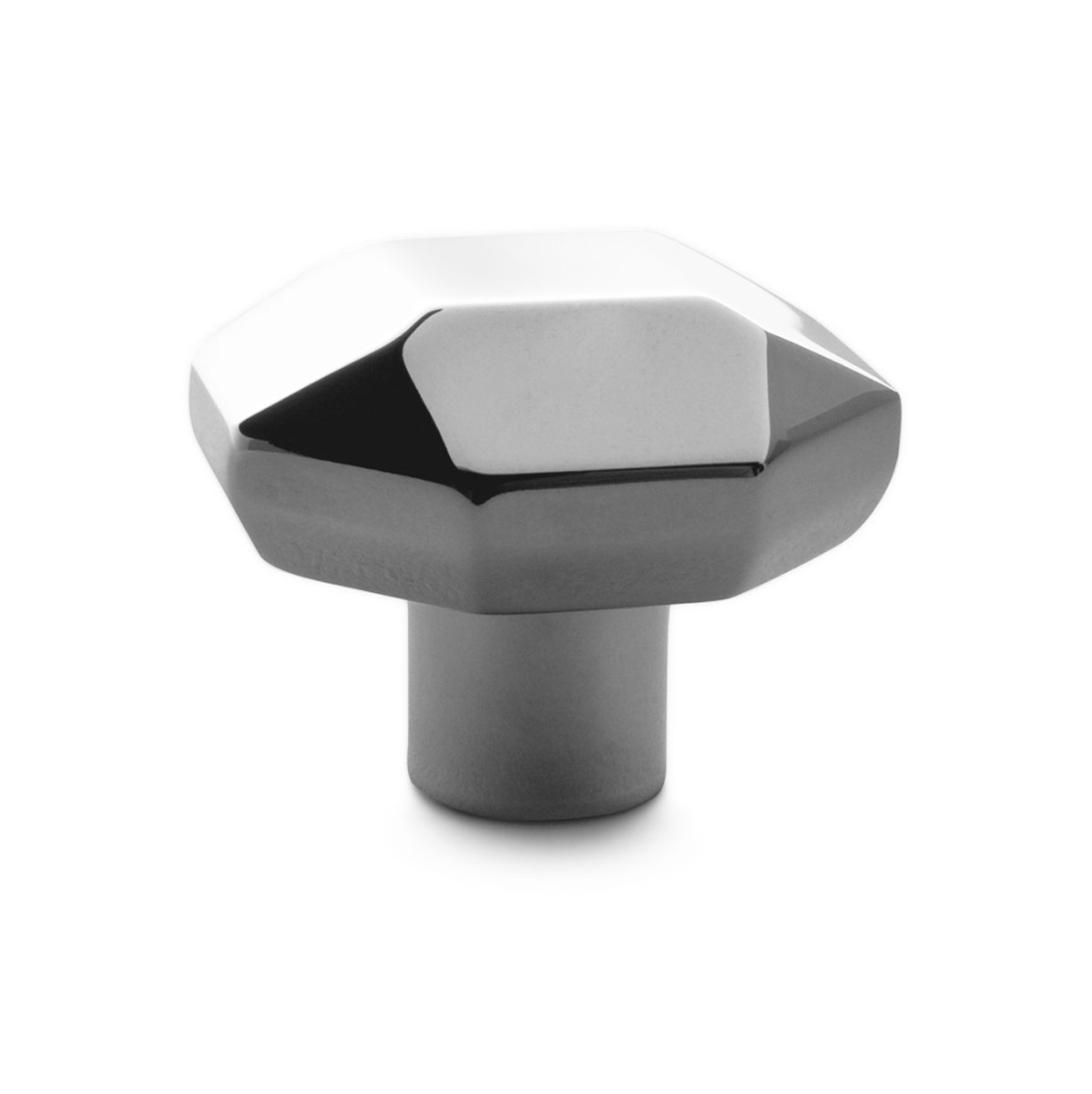
The No 8013 faceted octagonal cabinet knob plays with geometric forms with its multisized facets that transform the complex octagonal profile into a flat square plane at the center. Designed as a companion to the No 1013 full-sized knob, the 8013 has a machine-age craft aesthetic. All NANZ plated and patinated finishes are available.

 Login
Login
 to add an item to a